
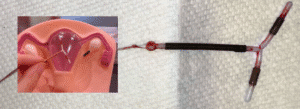
Salenger, Sack, Kimmel & Bavaro, LLP represents women nationwide in Paragard intrauterine device (IUD) lawsuits involving devices that broke during removal or fractured while still implanted. Thousands of women have reported severe injuries after a Paragard IUD broke, leaving copper fragments embedded in the uterus or migrating to other organs.
If you suffered pain, infection, infertility, or required surgery because a Paragard IUD broke during removal, you may be eligible to pursue financial compensation through a Paragard IUD lawsuit.
📞 Call 800-675-8556 or complete our secure contact form for a free, confidential case review.
Paragard is a non-hormonal, copper-based intrauterine device (IUD) approved for up to 10 years of pregnancy prevention. It works by releasing copper, which interferes with sperm motility and fertilization. Because it does not contain hormones, Paragard was widely marketed as a safe, long-term birth control option.
However, mounting reports and lawsuits allege that the Paragard copper IUD is defectively designed, making it prone to breaking during removal. When this happens, pieces of the device—such as copper wire or plastic arms—can remain lodged inside the body, leading to serious complications.
The Paragard IUD lawsuits allege that the manufacturer failed to warn doctors and patients that the device had a high risk of breaking. Many women were told removal would be simple and low-risk, only to suffer traumatic injuries when the IUD broke during removal.
These claims are not a traditional Paragard class action lawsuit, but are instead consolidated in federal court as a Paragard IUD MDL (multidistrict litigation). Each woman’s Paragard lawsuit remains an individual claim, with compensation based on her specific injuries.
When a Paragard IUD breaks, fragments may embed in tissue or migrate beyond the uterus. Reported injuries in Paragard copper IUD lawsuits include:
If you suffered complications from a broken Paragard IUD, you may be entitled to financial compensation.
Call: 800-675-8556
Or fill out our secure contact form for a free, confidential case review.
The Paragard IUD litigation has reached a critical stage, with bellwether trials set to begin in January 2026 in the federal MDL pending in Georgia. Thousands of women allege that the Paragard copper IUD was defectively manufactured, causing the device to break during removal and leaving fragments inside the body—often requiring additional surgeries and, in some cases, hysterectomy, with potential impacts on fertility. These initial bellwether trials, followed by additional trials scheduled for March and May, are designed to gauge how juries respond to the evidence and are expected to play a significant role in shaping settlement discussions across the more than 4,000 pending cases.
As of January 2026, the Paragard IUD MDL continues to expand:
These updates are closely watched and may influence future Paragard IUD lawsuit settlement amounts.
A recent feature published by New York Magazine / The Cut examined the experiences of several women involved in the litigation and the broader medical and legal debate surrounding Paragard breakage. The article underscores the tension between acknowledging patient harm and avoiding unnecessary fear around effective contraception.
🔗 Read the full article here: What Happens If an IUD Breaks?
Learn more about the Paragard lawsuit update in our recent video:
You may be eligible to file a Paragard IUD lawsuit if:
Not sure if you qualify? Our Paragard lawsuit attorneys can review your case at no cost.
To pursue a Paragard copper IUD lawsuit, documentation may include:
Our legal team can help gather and review the necessary records.
While Paragard IUD lawsuit settlement amounts have not been finalized, compensation in successful cases may include:
Each Paragard lawsuit is evaluated individually.
Is this a Paragard class action lawsuit?
No. These cases are part of an MDL. Each woman files her own Paragard IUD lawsuit.
What are symptoms of a broken IUD?
Severe pain, abnormal bleeding, missing strings, infection, or unexpected complications during removal.
Can you remove a broken IUD yourself?
No. Attempting self-removal is dangerous and may worsen injuries.
If you were harmed by a broken copper IUD, you deserve answers and accountability. Our firm has experience handling complex medical device litigation and advocating for women injured by defective products.
📞 Call 800-675-8556
📩 Or complete our secure online form for a FREE case review